Planners
Budget planner books, and what actually makes them work
Dozens of bound planners are sold under this name and most of them differ only in cover art. Here is what the pages inside actually need to do, and how to tell before you pay for one.
- Published
- 19 August 2026
- Written by
- The Kakeibo Method team
- Reading
- 9 minutes
- Filed under
- What you keep it in
Search for a budget planner book and the results are almost all shop pages: a cover in one of six colours, a description promising to change your relationship with money, and a price. What none of them show you before you buy is the page layout inside, which is the only part that decides whether the thing gets used past March. A planner is a bound object you commit a year to, unlike a single printable sheet you can reprint if the first draft is wrong, so it is worth knowing what to look for before the money leaves your account.
This guide is about that decision: what the pages have to contain, which physical choices matter and which are marketing, and when a bought planner is genuinely the wrong tool for the job.
The short answer
A budget planner book works when four things are true on every monthly spread: income and the savings line sit at the top before anything else, the categories force a real decision rather than a guess at urgency, there is dedicated room to record what actually happened rather than just what was planned, and a page exists to read the two against each other at the end. Most bound planners get the first two half right and skip the fourth entirely, shipping a year of recording pages and nowhere to reflect on any of them.
What matters most: the categories, not the cover
The single biggest difference between a planner that gets used past the first quarter and one that gets shelved is not the paper weight or the colour of the cover, it is whether the categories printed inside force a real decision. The standard split in most retail planners is needs, wants and savings, and it sounds sensible until an actual month tests it. A car repair, a birthday gift for a cousin, a subscription you barely use: every one of them can be argued into need or want depending on the day, which means the category stops deciding anything and the planner becomes a list with three headings.
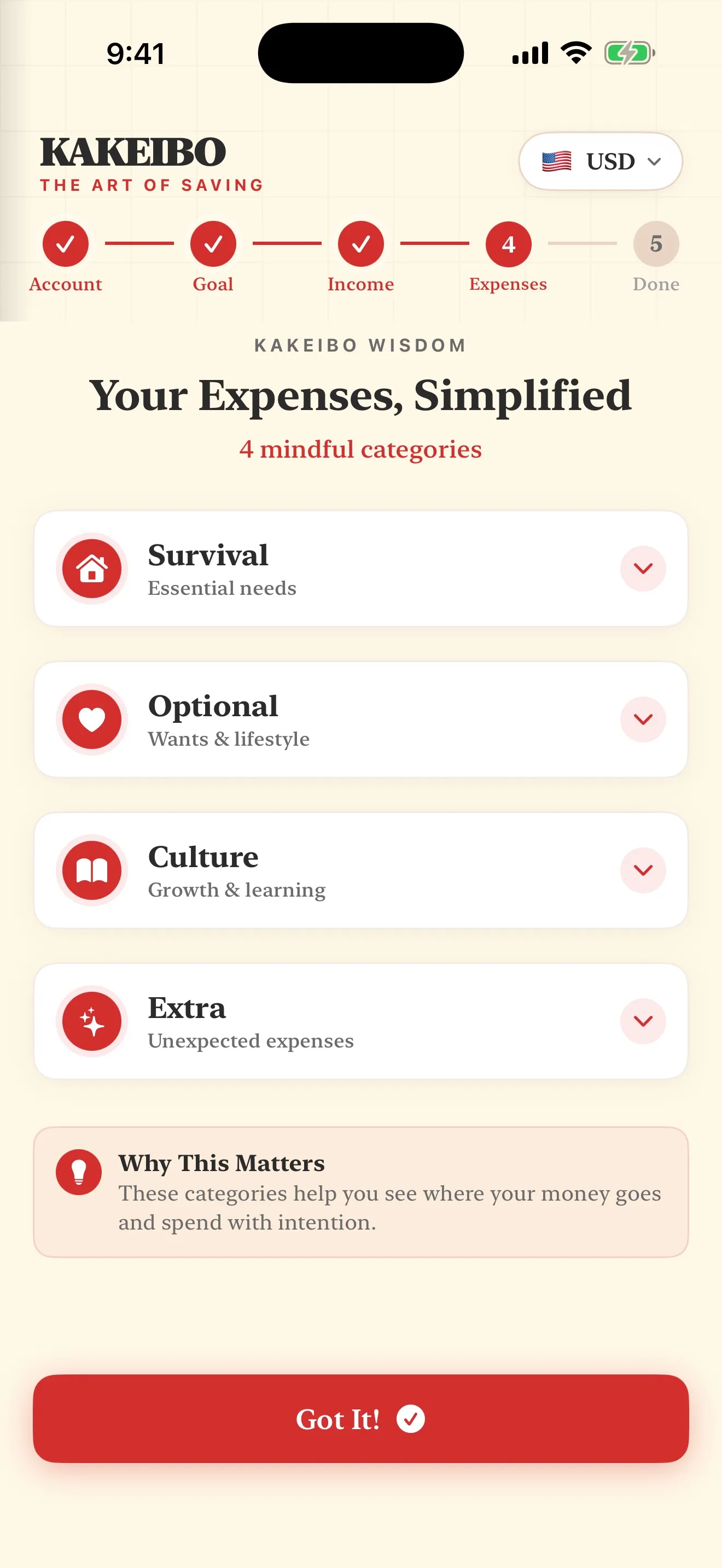
The four categories this method uses avoid that by asking a different question each, rather than the same question at three levels of urgency. Survival is what has to be paid regardless of how the month goes. Optional is what could be cut this week without consequence. Culture is what you would genuinely regret losing even though nothing breaks if you do. Extra is the spending that happens once rather than monthly, a repair, a gift, an annual renewal. The full case for each one, with the awkward cases argued out, is in the categories guide, and the four category split calculator will sort your own numbers before you buy anything, which is worth doing once so you know what proportions to look for on the shelf.
Dated, undated, and the binding that actually matters
Two physical choices matter more than anything on the cover. The first is whether the planner is dated. A dated planner assumes the reader starts on the first page in January, and most people buy one whenever they decide to, which for a book bought in April or August means the earlier months were paid for and never used. An undated planner lets month one be whichever month you actually open it in, and it is worth paying slightly more for that alone.
The second is the binding, and it is the choice most buyers never think about. A perfect bound planner, glued flat like a paperback, is fixed at however many months the publisher decided to print, and a household that needs more room for a busy month or wants to keep going past the last page is stuck buying a second copy. A spiral or discbound planner opens flat for writing, which matters every single day you use it, and a discbound one specifically lets you add extra pages, another weekly check, a second reflection page, without waiting for next year's edition. If the categories inside are close to right but not quite, a discbound planner is the only kind you can actually fix.
Where a bought planner genuinely falls short
Three honest limits, stated plainly rather than argued around. A bound planner is paid for as a whole year up front, which creates a reason to keep using pages that are not working simply because they were already paid for, and that sunk cost is worth naming before it talks you out of switching. A printed planner has a fixed amount of space per month, so a busy month overflows the ruled lines and a quiet month wastes most of the page, where a notebook or a screen both grow and shrink with the month. And like any single physical object, a planner that gets lost or damaged takes months of recorded history with it, with no copy anywhere else.
None of these are reasons to avoid buying one. They are reasons to know what a bound book is worse at before a whole year rides on it. A discbound planner solves the space problem by letting you insert a page, and a phone photo of each finished spread solves the lost book problem for the cost of a minute a month.
Planner book, plain notebook, or app
A bought planner is fastest to start and the most expensive of the three: nothing to design, nothing to rule, and a fixed structure someone else already decided. A plain notebook ruled by hand costs almost nothing and can be shaped exactly to your own month, at the price of twenty minutes with a ruler before the first entry, covered step by step in the notebook guide. An app is the only one of the three normally in your hand at the point of sale, which is a real advantage at the counter and no advantage at all during the monthly review, where paper and screen do exactly the same job.
We publish a kakeibo app, so it is worth being direct about the comparison rather than pretending not to have a stake in it: the app wins on entry speed and on totals that cannot be added up wrong, a bought planner wins on nothing except the version of a physical object that arrives ready made, and a ruled notebook wins on cost. None of the three wins on the part that actually changes spending, which is the decision to write the entry down at all.
How to actually choose one
Most shops show at least one photo of a real monthly spread before you buy, so look at that photo and check for four things. Whether the categories ask different questions or the same question three ways. Whether there is room to record what actually happened next to what was planned, not just one or the other. Whether there is a reflection page at the end of the month, separate from the totals, with room to write sentences rather than tick boxes. And whether the binding opens flat and, ideally, lets you add pages when a month runs long. A planner that fails the first two is a form. A planner that fails the third records a year without ever reading it back.
A worked month
Say the household opens the planner on a month with an income of two thousand and a savings line of a little over eighty, close to the monthly figure behind a target like 1,000 dollars over six months. That figure goes in the box at the top of the spread before anything else is written. Through the month, entries land in their category as they happen, rent and the electricity bill in Survival, a takeout order and a taxi home in Optional, a class booked for the month in Culture, a car repair in Extra. At the end of each week, the planner's check line gets a total against what was expected, and at month end, the reflection page gets the same four questions this site uses everywhere, worked through in writing with the totals open in front of you. The bound pages did their job the moment that reflection page had somewhere to go, which is the one page most planners on a shelf do not include.
A workable setup, start to finish
- Before buying, check a real photo of an inside spread for honest categories, a place for actuals next to the plan, and a separate reflection page.
- Prefer undated over dated, so month one starts whenever you actually start.
- Prefer spiral or discbound over perfect bound, so a long month and a short one both fit.
- Write income and the savings line into the top of each monthly spread before anything else.
- Log entries into their category as they happen, not from memory at the end of the week.
- At month end, run the four questions from the reflection guide against the totals, in writing, on whatever page the planner gives you for it. If it gives you none, add one.
None of this depends on the cover, the price, or the six colours it ships in. It depends on the categories meaning something, a binding that survives a real year, and a habit of writing in it that a busy week does not break. The pillar page on the kakeibo method sets out why that decision, made once before the first month starts, does more work than any planner's design.
Common questions
- What should a good budget planner book actually include?
- Four things, in a fixed order across every month: your income and savings line at the top, honest categories to decide spending into before you spend, a page to record what actually happened, and a page at the close of the month that reads the two against each other. A planner that only has the first two is a form you fill in before the month starts, not a budget.
- Should I buy a dated or an undated budget planner book?
- Undated, in almost every case. A dated planner assumes you are starting in January, and starting one in April means the earlier months you paid for are wasted pages. An undated planner lets the first month be whichever one you actually start in, which for most people buying one mid year is not January.
- Is a bought budget planner book better than a plain notebook?
- Not automatically. The binding, the paper and the printed lines are worth paying for if they save you the twenty minutes it takes to rule the same pages yourself, and worth skipping if the categories printed inside are the generic needs, wants and savings split. Our notebook guide shows the identical pages ruled by hand for the cost of a plain notebook.
- What is the difference between a budget planner book and a bullet journal for money?
- A bullet journal is a blank notebook you design yourself, entirely open ended. A budget planner book arrives with a specific structure already decided: monthly pages, weekly pages, category boxes. Buy a planner for the structure someone else worked out; keep a bullet journal if you would rather work it out yourself.
- Does the Kakeibo Method sell a physical budget planner book?
- No. We publish an app, and a free printable pack is being drawn rather than a bound book, described on the templates page. Everything argued in this guide about what a good planner needs to do works equally well in one you buy, one you rule yourself, or a screen.
- What categories should a budget planner book use instead of needs, wants and savings?
- Kakeibo's four, Survival, Optional, Culture and Extra, work better in a planner because each one answers a different question rather than the same question at three levels of urgency. Survival asks what has to be paid, Optional asks what could be cut this week, Culture protects what you would regret losing, and Extra holds the spending that happens once rather than monthly.
Read nextThe whole library →
Where this one leads
You want one page on the wallPrintable budget pagesWhat a printed page has to do to survive a real month, and where in the house it has to live.8 min readYou would rather use paperSetting up the notebookThe plan page, the daily spread, the weekly check and the monthly reckoning.9 min readThe download wants your email addressFree printable budget sheetsThree sheets doing three separate jobs, what free usually costs, and the Christmas sheet done properly.10 min read
A bound book, or a screen, with the same four categories
Income at the top, four honest categories, a place to write what actually happened, and a reflection page. That is the whole planner, printed and bound or not.
Get the Kakeibo app freeiPhone and iPad · Free tier, no account needed