
Free calculator
Save an amount by a date
The number first, the reasoning after. Enter the target and the horizon, and the four figures that matter come back before you have finished reading this sentence.
Savings target calculator
Why the daily figure is the useful one
A monthly figure tells you whether a plan is possible. A daily figure tells you which habit has to change to make it happen, and those are different questions. Most people can tell you instantly whether their month has room for another few hundred; almost nobody can tell you where it went last month. The daily number closes that gap because it is small enough to compare against things you actually buy.
That is also why kakeibo asks you to write spending down by hand as it happens rather than reviewing a statement later. The ledger is not bookkeeping. It is the mechanism that makes the daily figure visible while you can still do something about it.
Then the kakeibo question
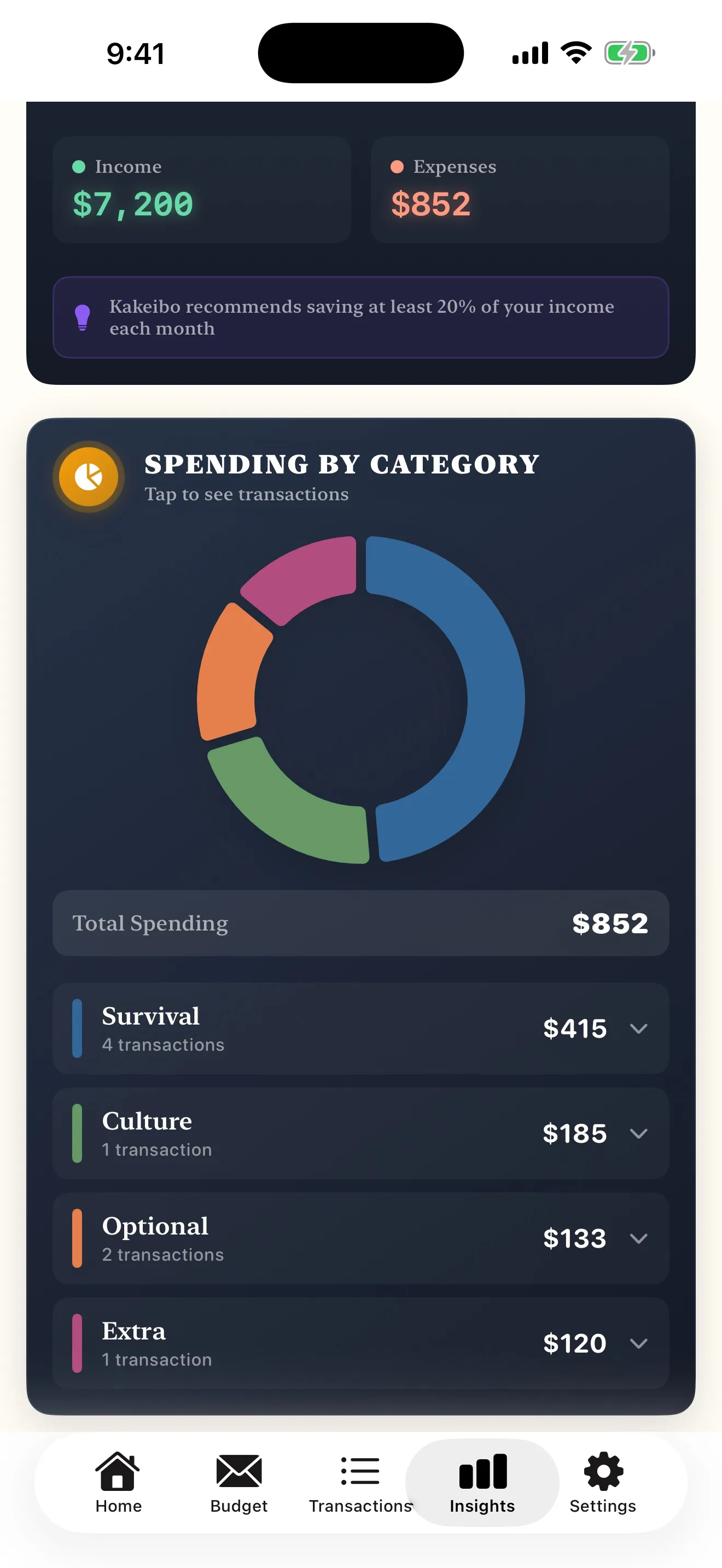
Once you have the figure, the method asks the question no calculator can answer for you: which of the four envelopes gives it up. Small targets come out of Optional without anything that feels like a sacrifice. Larger ones eventually reach Survival, and Survival means fixed costs, which are decisions with a lead time of months. Saying that plainly is the difference between a plan and a wish.
Every combination on our grid is already worked out, envelope split included: 294 pages across 14 targets, 7 horizons and 3 currencies, indexed on the savings targets page.
If the number is uncomfortable
Move the date first. A target that collapses in month three teaches you nothing except that you cannot be trusted, which is both untrue and expensive. The same target over a longer horizon usually holds, and a held plan is what builds the habit that carries the next one. If the date cannot move, the honest options are a smaller target or a structural change, and the savings rate calculator is the quickest way to see which one you are really facing.
Common questions
- How do I work out how much to save per month?
- Divide the target by the number of months between now and the deadline. That is the whole calculation. The weekly and daily figures are the same division against 52 weeks and 365 days a year, and they matter because a daily number is the one you can act on.
- Should I use the monthly or the weekly figure?
- Use the one that matches how you are paid. Money moved on the day it arrives is money you never had a chance to spend, so a fortnightly earner should set a fortnightly transfer rather than trying to hold a monthly figure in their head.
- Does this include interest on savings?
- No, deliberately. Plain division tells you the amount you have to move; a projection tells you what a rate might do. Any interest you earn arrives early, which is the direction you want to be wrong in.
- What if the monthly figure is too high?
- Move the date before you move the promise. A target that fails in month three teaches nothing; the same target over a longer horizon usually holds. The calculator shows you what each extra few months costs you in per month terms.
Division is instant. The ledger is the work.
Set the transfer, write the entries, read them back once a month. That sequence is a hundred and twenty years old and it still outperforms good intentions.
