
Free calculator
The kakeibo calculator
Income in, four envelopes out, in the order the method asks for them: what you have, what you promise to save, and only then what is left to divide.
Four envelope planner
What the calculator is actually doing
Kakeibo (家計簿, household ledger) does not divide income into percentages. It sets an order. First you write down what you have. Then you decide what you would like to save, and you take it out before anything else. Only the remainder gets divided, and it gets divided into four envelopes rather than the twenty categories a banking app would offer you.
So the arithmetic above runs in that order. Your savings promise leaves first. Your fixed Survival costs come out next, because they are already committed and pretending otherwise helps nobody. What remains is split between Optional, Culture and Extra, and those three are where a month is actually won or lost.
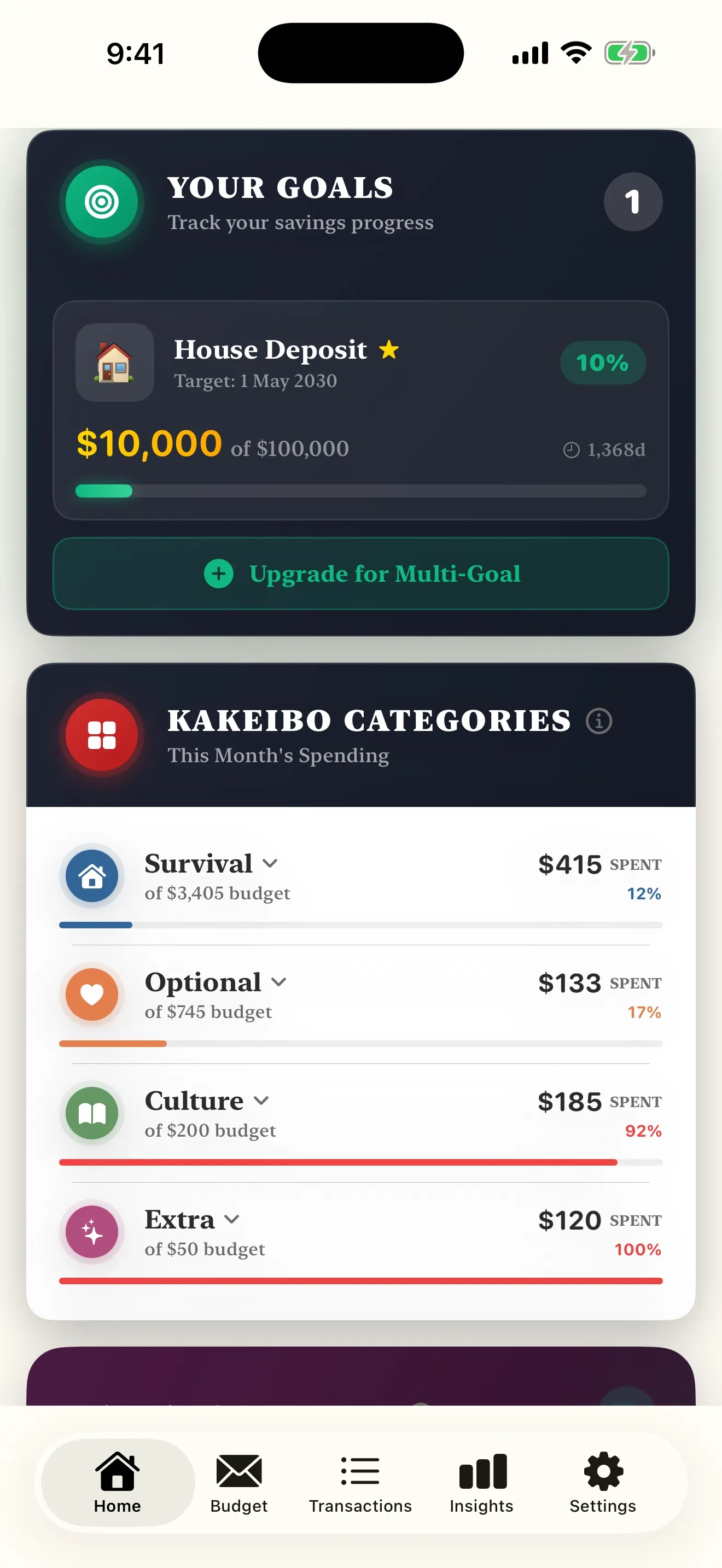
The four envelopes, briefly
- Survival is what keeps the household running: housing, food, utilities, transport, insurance, medicine.
- Optional is everything you enjoy and could stop: eating out, subscriptions, the shopping that is not replacing anything.
- Culture is what improves you: books, courses, concerts, a museum membership. The method treats this as separate on purpose, so that self improvement is not cut first by accident.
- Extra is the irregular: repairs, gifts, the vet, the excess on a claim. Funding it in a quiet month is what keeps a noisy month from becoming debt.
The long version of each, with a classified list of everyday expenses, is in the four categories guide.
Where the suggested shares came from
They came from us, and we would rather say so than dress them up as tradition. Hani Motoko's ledger asked her readers to decide their own divisions and then look honestly at what happened; it did not hand out a ratio. Sixty percent of the remainder to Optional is a starting position for a blank page, not a target to hit. After one honest month, your own numbers are better than ours.
If you would rather start from a rule that does publish percentages, the kakeibo versus 50/30/20 comparison runs both side by side on the same income.
Turning the envelopes into a goal
Envelopes tell you what a month looks like. A goal tells you when it ends. Once you know the amount you can move each month, the save an amount by a date calculator turns it into a finish line, and the savings target pages have the common combinations already worked out.
Common questions
- What percentages does kakeibo use?
- None. The method sets an order of operations rather than a set of percentages: income first, the savings promise taken out second, and only what is left divided between the four categories. Any site quoting official kakeibo percentages has invented them. The shares this calculator starts with are our suggestion for a blank ledger, and every one of them is editable.
- Should savings come out before or after spending?
- Before. That is the one structural rule the method insists on, and it is the reason kakeibo tends to work for people who have failed with tracking apps. What is left after the promise is the money you are free to spend, so overspending has to be a decision rather than a discovery at the end of the month.
- What goes in the Extra envelope?
- The irregular hits: a car repair, a wedding gift, a vet bill, the excess on a claim. Funding Extra in a normal month is what stops an ordinary surprise turning into debt or raiding the savings goal, and it is the envelope most beginners leave empty.
- What if my Survival costs are bigger than the split suggests?
- Then that is the real finding, and it is worth more than the calculator. A Survival share well above half of take home pay means the plan lives in housing and transport rather than in daily spending, and no amount of category discipline will change that arithmetic.
- Does this calculator send my figures anywhere?
- No. Everything on this page runs in your browser. Nothing is submitted, stored or logged, and the page works with the network switched off once it has loaded.
Four envelopes. One promise, taken out first.
That is the whole method, and it survives contact with a real month better than any category tree. The app keeps the ledger; the reflection stays yours.
