Reflection
The four questions, and how to answer them
Everything else on this site is arithmetic, and arithmetic is the half a computer can do. This is the other half: four questions, once a month, in writing.
- Published
- 31 July 2026
- Written by
- The Kakeibo Method team
- Reading
- 6 minutes
- Filed under
- Running the month
Kakeibo is often described as a budgeting system, which undersells it. A budgeting system allocates money. Kakeibo allocates money and then makes you write down what happened and what you intend to do about it, and the second part is the reason people who have failed with tracking apps succeed with a notebook.
The questions are asked in a fixed order, once a month. Two of them are answered at the start, one runs all month, and the last one closes it.
- 01How much money do you have?Everything arriving this month, counted before anything is committed. Wages, side income, benefits, a refund you are owed. This is the only question with a factual answer, so it takes two minutes and it goes first.
- 02How much would you like to save?Decided now, and moved out first. The word in the original is closer to would like than should: it is a promise you make to yourself, not a target handed down by a rule. Move it on payday and the rest of the month is spent inside what is left.
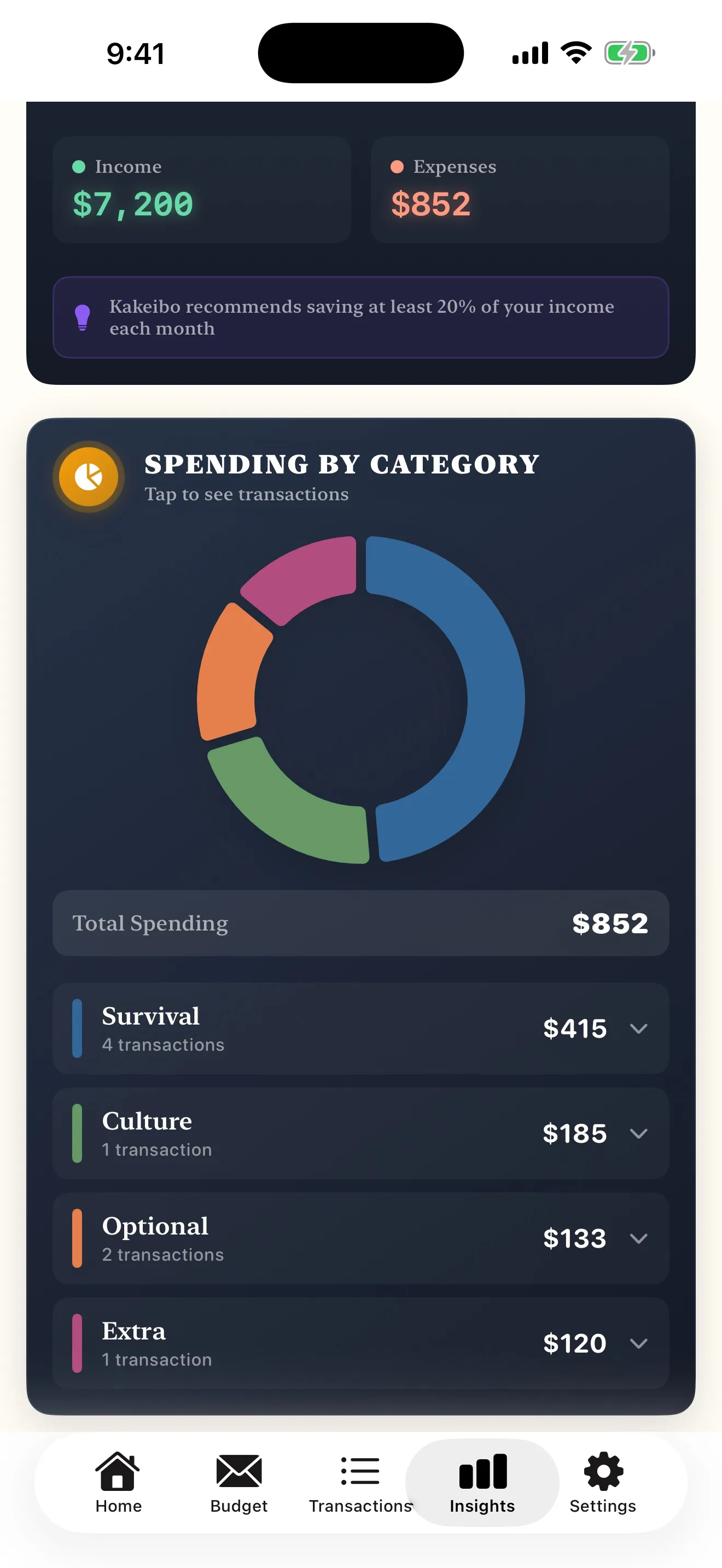
- 03How much are you spending?Not a forecast. This is the running record you keep all month, in four envelopes, written by you at the moment of spending. Answering it honestly is most of the work and all of the value.
- 04How can you improve?Asked at the end, in sentences, against the numbers rather than against a feeling. One change, not four, because a month with four changes in it cannot tell you which one worked.
Why the order matters more than the questions
Almost every budgeting method contains some version of these four prompts. What kakeibo does differently is insist that the second question is answered, and acted on, before the third. The savings promise leaves the account before the spending starts, which converts overspending from something you discover at the end of the month into something you decide during it.
That single reordering is what the method contributes. Everything else, the four envelopes, the handwriting, the monthly ritual, exists to make it stick.
The weekly check, five minutes
Not part of the original, and worth doing anyway. The trick is to guess before you look: the gap between your guess and the ledger is the exact size of the awareness you have not built yet, and it closes fast.
- What did I spend this week, by envelope, without looking it up first?
- Then look. How far out was the guess?
- Which single purchase this week would I not make again?
- Is anything missing from the ledger, and why did it go unrecorded?
- Is the savings promise still intact, or has something already borrowed from it?
The monthly reflection, fifteen minutes
Do it with the ledger open and the month closed. Write sentences rather than scores, because next year you will be able to read a sentence and will have no idea what a seven out of ten meant.
01What surprised me?The gap between what you assumed and what the ledger says. Surprise is the single most useful signal in the method, because it marks the spending you were not conscious of.
02Which envelope did the damage?Not which purchase. Purchases are anecdotes; envelopes are patterns, and a pattern is the only thing you can act on next month.
03What did I buy that I am glad about?A reflection that only records regret becomes a punishment, and punishments get avoided. Naming the money that was well spent is what keeps the practice survivable.
04Did the savings promise survive, and if not, what took it?This is the question that distinguishes a plan from a wish. If the promise did not survive twice in a row, the promise is wrong rather than you.
05What did Culture actually buy me this month?The envelope exists to protect improvement from being cut first. If it is full of things you did not use, it has quietly become Optional under another name.
06Was Extra funded, and did anything hit it?An unfunded Extra envelope is where a repair turns into debt. The month with nothing in Extra is the month to fill it, not the month to celebrate.
07What is the one change for next month?One. Write it as a sentence with a number in it, so that next month can tell you whether it worked.
How to write the one change
A change worth writing has a number and a boundary. "Spend less on takeaway" is not one. "Optional stays under a set figure, and I check it every Sunday" is, because at the end of next month the ledger can answer it with a yes or a no.
Keep the changes to one per month even when three are obvious. Three simultaneous changes produce a result you cannot attribute, and an unattributable result teaches you nothing about your own household.
Reading a year of reflections
The compounding value of this practice is not monthly, it is annual. Twelve written reflections show you the seasonal shape of your own spending: the months that are always expensive, the resolutions that never survive February, the category that quietly grew all year. No app that categorises your bank feed can give you that, because the value is in the sentences you wrote rather than in the data.
Keep the savings rate at the top of every entry so the trend is visible at a glance. The savings rate calculator works it out, and the four category split turns the month into shares of income for the same purpose.
If you are starting from scratch
Measure one normal month before changing anything. The first reflection of a beginner is almost always about the surprise rather than about improvement, and that is exactly as it should be: you cannot improve a number you have never seen. The method itself, and where these questions came from, is set out in what is kakeibo.
Common questions
- What are the four kakeibo questions?
- How much money do you have? How much would you like to save? How much are you spending? How can you improve? They are asked in that order and answered in writing, and the order is the mechanism: the savings promise is made before the spending is planned, so saving is never a leftover.
- How long should a monthly kakeibo reflection take?
- About fifteen minutes if the entries were kept as you went. If it takes two hours, the problem is not the reflection, it is that the month is being reconstructed from a statement rather than recorded as it happened.
- Do I have to write the answers down?
- Yes, and this is the part people skip. Answers you think about disappear; answers you write can be read back next month, which is what turns twelve separate months into a trend you can act on.
- Is there a weekly version?
- The original is monthly, but a short weekly check works well alongside it: guess the totals, then look, and note the difference. Guessing first is what trains the awareness the method is actually built to produce.
- What if the month went badly?
- Write it down anyway, and in more detail than a good month. A reflection log that contains only successful months is a scrapbook rather than a record, and it teaches nothing about the conditions that cause the bad ones.
Read nextThe whole library →
Where this one leads
You would rather use paperSetting up the notebookThe plan page, the daily spread, the weekly check and the monthly reckoning.9 min readYou want a number, not a percentageHow much to saveNo agency publishes a recommended rate. Work the figure from your own income and your own Survival costs instead.9 min readYou have read the savings claim and doubted itDoes kakeibo actually workThe figure everybody repeats, traced to nothing, then the three mechanisms that are genuinely defensible.9 min read
Fifteen minutes, once a month, in writing
It is the cheapest financial habit there is, and the only part of the method that genuinely cannot be automated.
Get the Kakeibo app freeiPhone and iPad · Free tier, no account needed