
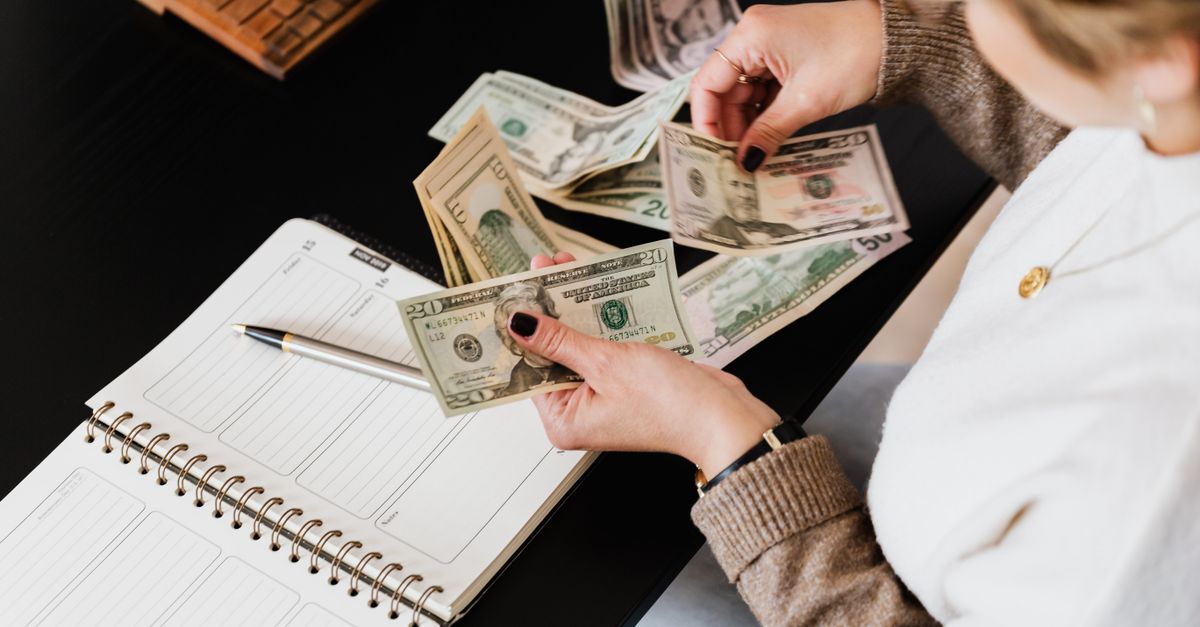
Yes, for most people, mostly because cash is slower and more visible, not because coins and notes have some special power over willpower.
Here’s the mechanism, and you don’t need a study to see it: a card payment is one tap and the number disappears into an app you may not open for days. Cash means counting it out, watching the pile in your wallet get thinner, and physically handing it over. That half second of friction is where hesitation lives. It’s the same reason a kakeibo ledger works even without cash: the point isn’t the paper, it’s the pause.
Where this shows up in a kakeibo month
In the kakeibo method, income gets written at the top of the month, the savings amount gets moved out first, and what’s left gets split into four envelopes: Survival, Optional, Culture, and Extra. Cash makes those envelopes literal instead of just lines on a page. When the Optional envelope has a specific amount of physical notes in it and you can see it shrinking, every purchase from it carries a small, concrete cost. A card draws from an account that feels bottomless until the statement arrives.
Where cash friction helps and where it doesn’t
| Situation | What usually happens |
|---|---|
| Small, frequent, optional spending (coffee, snacks, impulse buys) | Cash friction has the most effect, because each purchase is a separate visible decision |
| Large, planned purchases | Friction barely matters, since you’ve already decided before you pay |
| Recurring Survival costs (rent, utilities) | Cash doesn’t help or hurt, since the amount is fixed either way |
| Culture spending (books, a class, a gift that leaves you better off) | Friction can backfire here if it makes you skip something genuinely worth it |
So cash isn’t a universal fix. It’s a tool that sharpens the moments where you’re deciding whether to spend at all, which is mostly the Optional envelope.
How to test it on yourself, without any app or system
- Pick one envelope, probably Optional, and withdraw that amount in cash for the month.
- Write down each purchase close to the moment it happens, even just the amount and what it was for.
- When the cash runs out, stop spending from that envelope. No topping up from a card “just this once.”
- At month end, ask the four closing questions: how much did I have, how much did I want to save, how much did I spend, what would I do differently.
If the cash envelope consistently lasts the month and the card version of the same budget doesn’t, you’ve found your personal answer. If it makes no difference, you’re probably someone who already pauses before spending, and the friction was never the missing piece for you.
The honest version of the answer is that cash doesn’t change what you value, it just slows down the gap between wanting and buying. For some people that gap is exactly where the overspending happens. For others, the gap was never the problem.


